

AI Explainer: How edge computing works, why it matters, and real-world examples
TL;DR: Edge computing processes data close to where it's generated instead of routing everything back to a distant, centralized datacenter. For AI applications, that proximity is becoming a requirement rather than a bonus, because inference (the real-world use of an AI model, where it takes a new input and produces a result, having already learned from its training), has to run in something close to real time. This piece covers the different layers edge computing operates at, why AI inference specifically is driving so much workload out to the edge, and where it's already showing up, from live traffic navigation to smart factories to cloud gaming.
Edge computing means processing data close to where it is generated, instead of sending it to a centralized data center that could be hundreds or thousands of miles away. For most of the last decade that was a nice-to-have. For AI, it is becoming a requirement, because AI inference needs to happen in something close to real time, and a long round trip to a distant server works against that.
How edge computing works
There is no single "edge." It exists at several layers, each one trading off distance for speed. Device edge is the origin point itself: a smartphone, a sensor, or a smart doorbell where at least some processing can happen on the device before anything is sent anywhere.
On-premises edge puts compute directly at a factory, hospital or utility site, so data gathered locally is processed and acted on without leaving the building.
Network edge sits inside existing network infrastructure, positioned to serve a local area with low latency.
Distributed compute nodes extend that further, forming a wider network that brings processing meaningfully closer to users than a centralized cloud facility ever could.
Every step closer to where the data originates cuts latency further, and this is exactly what's driving edge compute deployments today.
Why it matters for AI specifically
AI workloads split into two very different jobs. Training a model is enormously compute intensive and will keep happening in centralized cloud data centers, that is not changing.
Inference, which is putting a trained model to work on new requests, is a lighter workload, and it runs continuously, handling each new request as it comes in. That combination, lighter compute plus a hard requirement for speed, is exactlywhat edge infrastructure is built for. There is a name for making the most of that efficiency: intelligence per Watt, the useful, token-generating output drawn from every Watt a GPU consumes.
The result is a tiered model. Requests that can be handled locally are resolved right there, with minimal latency and near real-time response. Anything heavier continues on to a centralized facility. Gartner predicts that by 2028, more than two-thirds of enterprise-managed data will be created and processed outside the data center or cloud [1], which gives a sense of how much of this workload is shifting to the edge tier.
An edge node can also be targeted, tuned to the kind of requests a specificlocation actually gets, whether that is a factory floor, a busy transit hub ora regional population with its own language and needs.
The scale of that shift is already visible in market numbers. Grand View Research values the global edge AI market at $24.91 billion in 2025, projecting it will reach $118.69 billion by 2033, a compound annual growth rate of 21.7%[2].
There is a second reason this architecture matters. Processing closer to the user keeps data closer to the user, which matters for organizations managing data-residency and sovereignty requirements. That is a real advantage of edge architecture.
Real world examples
Satellite navigation with live traffic data only works because edge nodes process location data from thousands of vehicles in real time, turning raw positioning data into something a driver can actually act on.
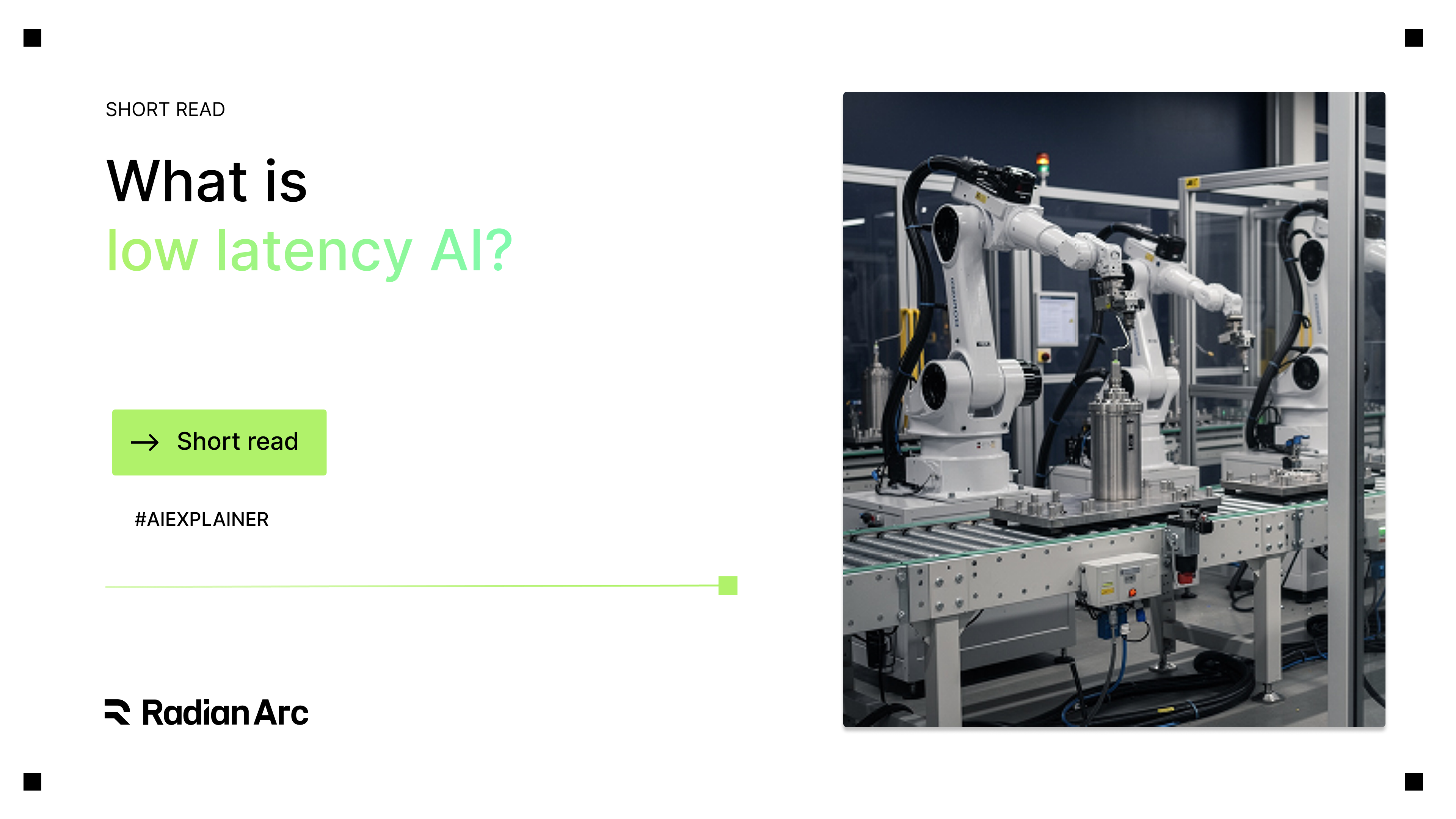
Manufacturers use edge compute on factory sensor data to catch equipment issues or productivity drops as they happen, before they turn into downtime.
Smart city systems lean on the same principle, processing traffic, environmental or safety sensor data locally to give city authorities insight they can act on immediately.
Autonomous vehicles push that same logic to its most safety-critical extreme, processing sensor data on board in real time to make split-second driving decisions that cannot wait on a round trip to the cloud.
Weather prediction is a less obvious example, but edge AI analysis of meteorological sensor data is improving both the speed and the localization of forecasting.
Cloud gaming is one of the clearest examples of why edge proximity matters commercially. Games run on remote GPU servers and stream to a player's device, and the entire experience lives or dies on latency, since controller input has to register on screen instantly. That is exactly the model RadianX brings to telecom operators, turning existing network infrastructure into a gaming platform without requiring players to own expensive local hardware.
Where this is heading
As mobile devices get more powerful and 5G becomes standard, more processing will split between the device itself and a nearby edge node rather than defaulting to a distant cloud server. Gartner expects more than two-thirds of enterprises globally to have deployed edge AI by 2029, up from just 10% in 2025[3],and that pace of adoption is the clearest signal yet that this is moving from early advantage to standard infrastructure.
The organizations that get inference right will be the ones building edge compute into their infrastructure from day one, routing each workload to wherever it can run fastest, most cost-effectively and within the right data-residency boundaries. That routing decision, what runs where, is exactly what an AI control plane like InferX's is built to handle.
For the full data and the road ahead, download our Edge long read using the link below
[1] https://zededa.com/gartner-predicts-2026/
[2] https://www.grandviewresearch.com/press-release/global-edge-ai-market
[3] https://zededa.com/gartner-predicts-2026/


.avif)