


Farming data, harvesting insights
Producing more with less
Global food demand continues to rise while arable land, water, subsidies, and skilled labor are in decline.

Agriculture is a data-rich industry
Modern agriculture operations generate masses of data, but producers are data rich and insight poor.
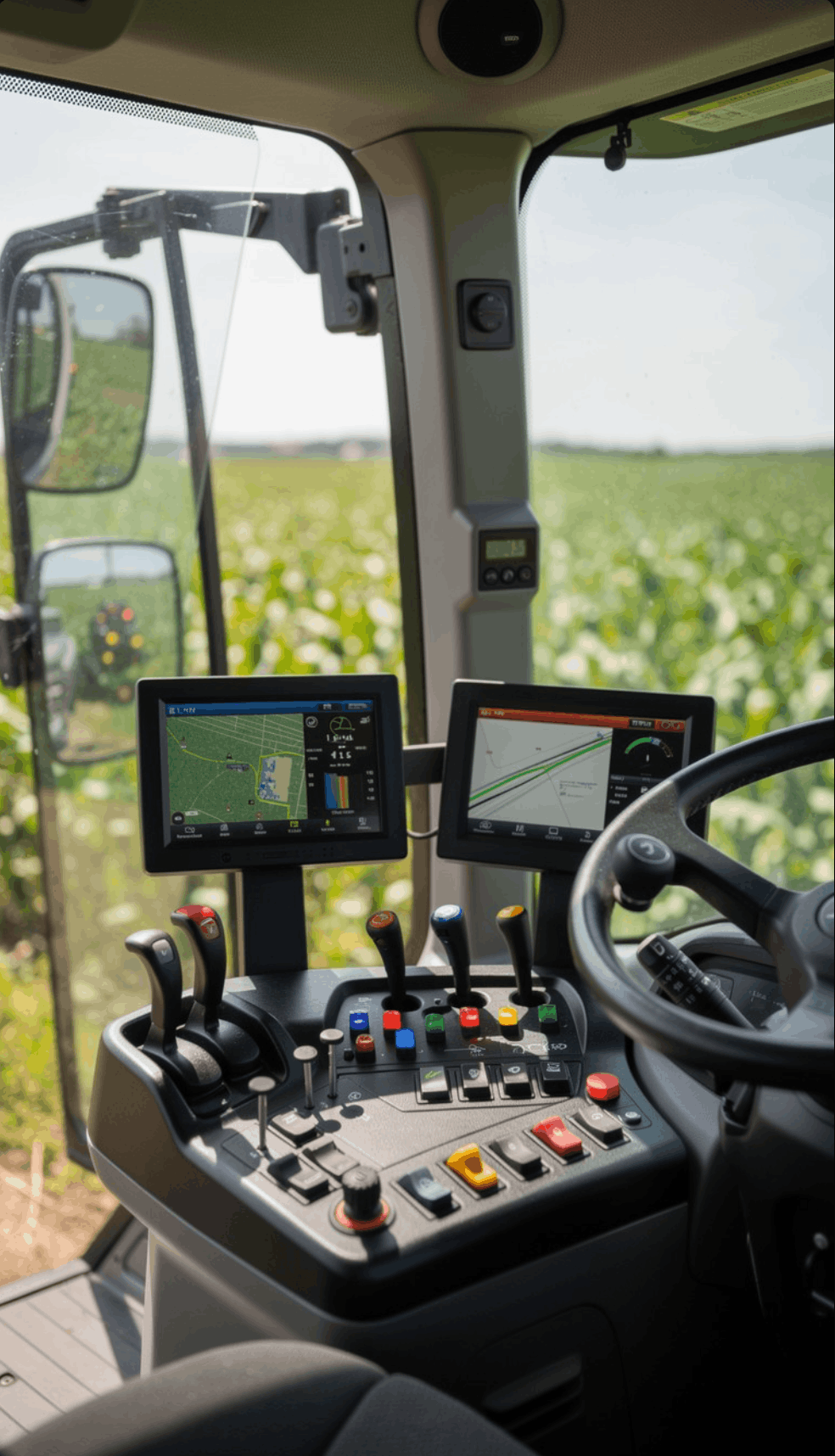
Climate volatility needs fast decisions
Shifting weather patterns, new pest and disease pressures, and extreme events are compressing the window between detection and response.


Data feast, insight famine
Agriculture is fertile ground for AI, but economics make harvesting the data difficult
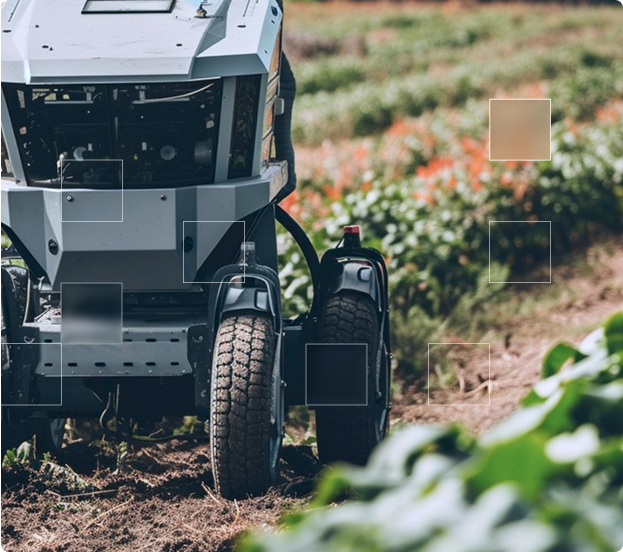
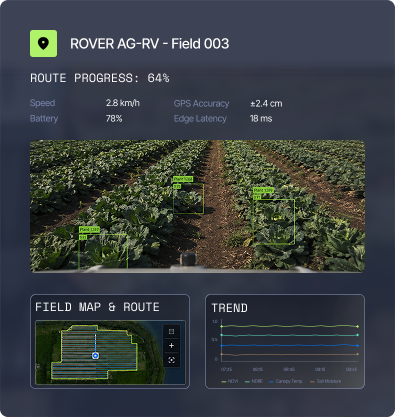
Farms generate data in rural and remote locations. For time-critical applications like disease detection or autonomous machinery, the round trip to a distant cloud breaks the use case.
Most agricultural organizations hold valuable proprietary data but lack a clear pathway to turn it into a working AI model, due to lack of in-house capability and generic platforms not catering to their specific needs.
Agriculture operates on tight margins. Hyperscaler pricing models built for enterprise software budgets, with unpredictable token costs and oversized frontier models applied to narrow tasks, make many agricultural AI use cases commercially unviable before they start.
Agricultural data increasingly touches national interests: food security, land use, water resources and supply chain resilience.


.svg)
.png)
Applied AI for agriculture
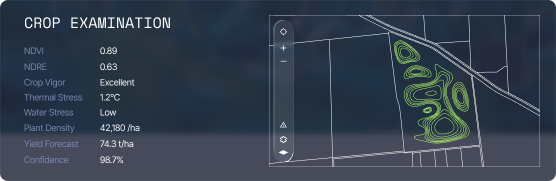
Agriculture is one of the most proven applications of applied AI. Computer vision detects crop disease, pest pressure and nutrient deficiency from drone and satellite imagery before problems become visible, while predictive models combine soil, weather and historical yield data to optimize planting, irrigation and inputs. Livestock monitoring identifies health issues days earlier than manual inspection.
Most agricultural AI is inference, not frontier-scale training. Success depends on running the right models close to the field, against local data, at a cost the industry can sustain. That's an infrastructure challenge as much as a model challenge and where most agricultural AI initiatives succeed or fail.

Why the grass is greener with Radian Arc
Radian Arc deploys dedicated GPU capacity at the network edge through its federated network of telco and data center partners, placing AI compute close to rural data sources. Low-latency processing and in-country deployment models ensure data remains within jurisdictional borders where required.
Radian Arc takes agricultural organizations from ideation to deployment, pairing its AI application developer network with deep understanding of agricultural use cases to turn owned data into outcome-generating models, while maintaining local control over critical datasets.
Radian Arc's AI control plane routes every inference request to the right model at the right compute destination, maximizing intelligence per Watt and delivering more useful output per GPU.
Radian Arc: More yield per Watt.

.avif)